
Coordinating Multidimensional Factors and Safeguarding Supply Chain Resilience: The Systematic Practice of Automotive Components Project Management Expert Junzhe Ruan
 2026-06-24
By Yang Zhou
As the global automotive industry accelerates its transformation toward lightweight and intelligent technologies, the core demands placed on supply chains by Original Equipment Manufacturers (OEMs) are undergoing a profound evolution. The birth of a new vehicle model is not merely a convergence of design and technology, but the realization of a highly sophisticated, rigorous global supply chain. Within this precision-engineered network, the tier-one supplier’s program manager serves as the "commander-in-chief," transforming blueprints into mass-production realities. Junzhe Ruan, a project management expert specializing in the automotive glass sector, leverages his robust academic foundation in industrial engineering and extensive command of cross-border programs to implement rigorous systems engineering logic across this heavy manufacturing domain.
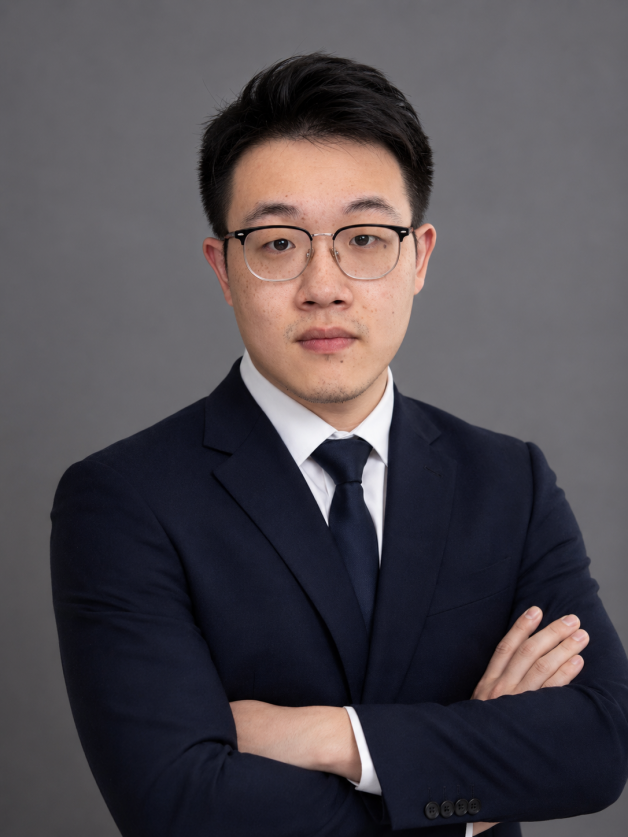
Photo of Junzhe Ruan
As a critical component linking vehicular aesthetics with occupant safety, automotive glass research, development, and mass production entail exceptional technical complexity. This is particularly true in the North American automotive market, where OEMs impose stringent standards for product compliance, full-lifecycle quality control, and the Production Part Approval Process (PPAP). For suppliers, the boundaries of project management have expanded far beyond basic timeline tracking; it has evolved into a multidimensional system integration that encompasses collaborative design, process optimization, supply chain finance alignment, and regulatory compliance reviews. In an environment characterized by highly frequent engineering changes and intense mass-production readiness requirements, ensuring that a project successfully navigates milestone evaluations—such as Gate Reviews—serves as the ultimate litmus test for a program manager’s core competencies.
Ruan’s professional foundation originates from the industrial engineering curriculum at the Georgia Institute of Technology. Completing both his bachelor’s and master’s degrees at this elite institution equipped him with exceptional systematic thinking and operations optimization capabilities. When this theoretical framework was applied to his role as a Program Manager at Fuyao Automotive North America, Inc., it translated into a powerful engineering management methodology. Throughout the automotive glass development cycle, and when interfacing with top-tier global OEMs at the pinnacle of the industry, Ruan effectively translates complex technical engineering terminology into clear, actionable logic. Through precise risk intervention and proactive process optimization, he establishes a solid foundation for the efficient advancement of concurrent programs.
Among the numerous benchmark cases managed by Ruan, the representative "LB Program" exemplifies his comprehensive control over large-scale, critical programs. The OEM for this project is the global automotive giant Stellantis, and the vehicle involved is the highly anticipated Dodge Charger. This model holds immense weight in the industry and was honored as the "2026 North American Car of the Year™." As a highly disruptive, high-performance vehicle, the Dodge Charger demands exceptional body rigidity and streamlined aerodynamic designs. Ruan’s company was responsible for supplying the sunroof and quarter window glass for this model, presenting self-evident manufacturing challenges and delivery pressures.
In the LB Program, Ruan led the key development and delivery phases. Because automotive glass development is highly sensitive to upstream styling modifications, one of Ruan’s pivotal roles was representing the supplier to maintain high-frequency alignment with the OEM’s engineering teams. During critical Gate Reviews and PPAP stages, he precisely translated the OEM’s technical inputs into actionable guidelines for internal product, design, and quality engineers. Through his cross-functional orchestration, internal units spanning production planning, process engineering, tooling, logistics, and commercial operations operated in tight synchronization. This effectively dismantled traditional manufacturing "information silos" and achieved a parallel acceleration from tooling readiness to assembly line deployment, ensuring the premium delivery of both prototype samples and mass-production parts.
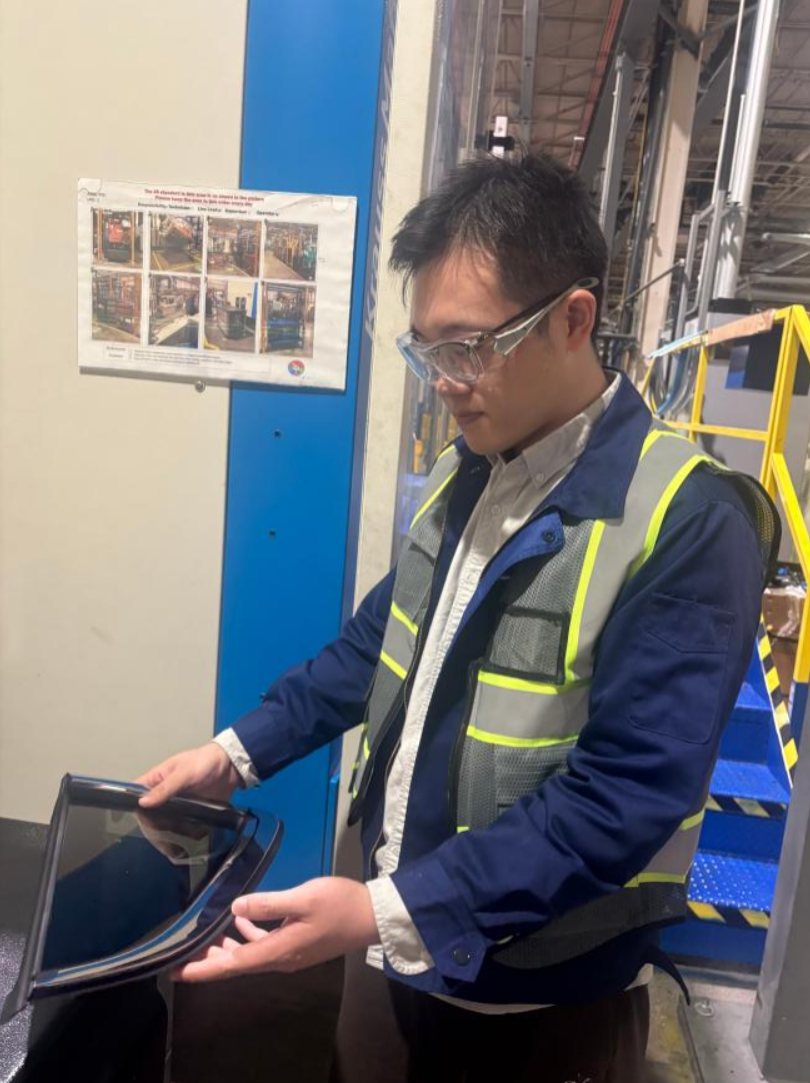
Junzhe Ruan inspects the physical state of automotive glass products on the shop floor
Furthermore, Ruan extends his project management vision well beyond the boundaries of pure engineering and manufacturing. In supply chain partnerships, tooling development, engineering development, and testing frequently involve complex financial transactions. In his practical operations, Ruan actively interfaces with finance, legal, commercial, and IT departments, deeply embedding himself in accounts receivable processes and comprehensive business alignment. This unique ability to align "technology, finance, and legal" into a cohesive triad allows him to evaluate project risks from the perspective of overall corporate operations. Beyond the LB Program, he concurrently manages the "KM74 Program" for the Stellantis Group and the "VW426 Program" for Volkswagen. When confronting the vastly distinct evaluation metrics of different automotive groups, he seamlessly navigates between systems and consistently delivers high-quality outcomes.
From the academic halls of industrial engineering to the front lines of North American automotive manufacturing, Ruan’s practices within the specialized automotive glass sector outline a clear portrait of a new-generation automotive component project management expert. Driven by data and anchored by systems engineering, he utilizes his solid professional expertise and outstanding cross-functional integration capabilities to build an efficient collaborative bridge within the fiercely complex global automotive supply chain. Today, as the global automotive supply chain continues to restructure and OEMs demand extreme collaborative efficiency, this professional capability—which perfectly merges engineering technical language with commercial financial logic, while uniting diverse stakeholder teams under a singular roadmap—is becoming a vital driver pushing the automotive industrial ecosystem steadily forward.